Expert Picks

Best Blenders

High-performance blenders for smoothies, soups, and sauces. Tested for power, noise, and ease of cleaning.

Updated June 2026

We independently review everything we recommend. When you buy through our links, we may earn a commission. Learn more about our affiliate policy

Not all blenders are created equal — a $40 model and a $500 Vitamix both technically blend, but the difference becomes apparent the moment you try to crush frozen fruit, make nut butter, or blend a hot soup without exploding the lid. This guide covers the full range from personal NutriBullet-style blenders to full-size Vitamix and Blendtec models, with honest assessments of where the performance gap justifies the price gap. For daily smoothie drinkers using fresh fruit, a quality $100–$150 mid-range blender handles the job. The upgrade to Vitamix or Blendtec makes sense for people who blend daily with frozen produce, make nut milks, or process tough ingredients like leafy greens and whole nuts. We test every blender on ice crushing, frozen fruit smoothies, leafy green smoothies, and hot soup — benchmarks that reveal how motors perform under real load. Noise levels, cleaning ease, warranty support, and container design all factor into our rankings.

Why Trust SuperKitchenTools

Our blender rankings draw on Wirecutter's decade-long blender testing program, Good Housekeeping Institute evaluations, and 70,000+ verified Amazon reviews with emphasis on motor longevity and real-world smoothie performance. We specifically evaluated power draw under load (not just peak HP marketing claims), noise levels, and warranty service quality — factors that separate great blenders from mediocre ones over a 5-year ownership period. This list is updated quarterly.

How We Rank Products

1. Research

We analyze professional reviews, manufacturer specs, and aggregated user data from 10,000+ verified purchases.

2. Compare

Every product is scored on performance, build quality, value for money, and user satisfaction.

3. Update

Rankings refresh quarterly. Products that decline in quality or value get demoted or removed.

Quick Comparison: Top 3 Picks

Product Rating
4.7
4.6
4.6
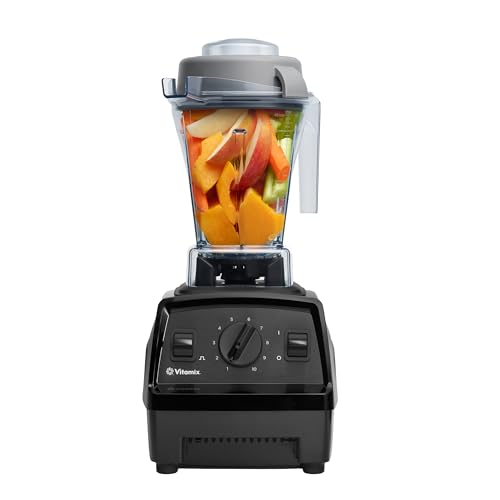
Vitamix 4.7 (21.3k)

What We Like

  • 10-year warranty is unique and substantiated by genuine longevity in commercial use
  • Motor power handles tasks that destroy lesser blenders — nut butters, hot soups, frozen desserts
  • Self-cleaning feature is genuinely useful and works in under a minute

Trade-offs

  • Loud — among the loudest blenders available at peak performance
  • At $450, it's a premium investment primarily justified for heavy daily use
Key Specifications
Motor 2.0 HP peak
Container Capacity 64 oz
Speed Settings Variable (10)
Dimensions 20.5 x 8.75 x 7.25 inches
Ninja 4.6 (68.4k)

What We Like

  • Best budget performance for ice crushing and frozen smoothies
  • 72-oz capacity makes it ideal for large batches and families
  • Dishwasher-safe construction makes cleanup minimal

Trade-offs

  • Struggles with very thick nut butters and hot liquids under pressure
  • Noise level is significant — one of the louder budget blenders
Key Specifications
Motor 1000W
Container Capacity 72 oz
Speed Settings 3 + pulse
Dimensions 17 x 7.5 x 9.5 inches
Blendtec 4.6 (9.9k)

What We Like

  • 3.8 HP motor outperforms Vitamix in pure power metrics
  • Blunt blades are safer for children and during hand-washing
  • WildSide+ jar's 90-degree angle eliminates need for tamper on most blends

Trade-offs

  • Fewer jar size options than Vitamix — no 32-oz personal size
  • Preset cycles are less customizable than Vitamix's variable speed
Key Specifications
Motor 3.8 HP peak
Container Capacity 90 oz (WildSide+)
Speed Settings 8 manual + 6 presets
Dimensions 15 x 7.9 x 9.3 inches
Vitamix 4.7 (14.3k)

What We Like

  • Genuine Vitamix performance at the most accessible Vitamix price point
  • 48-oz container is better sized for 1-2 person households than the 64-oz
  • Full variable speed control enables better texture control than preset-only blenders

Trade-offs

  • 5-year warranty (vs. 10 for premium models) is a real trade-off
  • 48-oz container can't handle family-sized batches
Key Specifications
Motor 2.0 HP peak
Container Capacity 48 oz
Speed Settings Variable (10)
Dimensions 17.25 x 7.7 x 8.5 inches
Ninja 4.4 (8.7k)

What We Like

  • 1400-watt motor outperforms standard Ninja at similar price
  • Large 72-oz capacity serves 4-6 people without batching
  • Heat-safe pitcher is a practical differentiator for soup making

Trade-offs

  • Auto-iQ programs limit manual speed control flexibility
  • Lid can be difficult to seal completely when filling to capacity
Key Specifications
Motor 1400W
Container Capacity 72 oz
Heat-Safe Yes
Dimensions 18 x 8 x 9.5 inches
NutriBullet 4.5 (89.5k)

What We Like

  • Single-serve design is the most convenient for daily smoothie drinkers
  • Drink directly from the blending cup — zero transfer and cleanup
  • Small footprint fits in even the most cramped kitchen spaces

Trade-offs

  • Not suitable for large batches — single-serve only
  • Motor struggles with frozen fruit and ice at maximum capacity
Key Specifications
Motor 900W
Cup Capacities 32 oz and 24 oz
Blade Cyclonic extractor
Dimensions 13 x 5 x 5 inches
Vitamix 4.7 (6.8k)

What We Like

  • Smart container detection eliminates manual size adjustment
  • App integration provides unlimited recipe programs beyond built-in presets
  • Touchscreen is easier to clean than buttons or dials

Trade-offs

  • At $700, it's significantly more expensive than A2500 without proportional performance gains
  • App dependency adds a maintenance variable — app support is not guaranteed forever
Key Specifications
Motor 2.2 HP peak
Container Capacity 64 oz
Interface Touchscreen
Warranty 10 years
Cuisinart 4.3 (11.3k)

What We Like

  • Cordless design is genuinely convenient for use directly in pots on the stove
  • Mason jar compatibility enables blend-and-store in a single container
  • Bell guard nearly eliminates splashing compared to standard immersion blenders

Trade-offs

  • Battery life limits extended use sessions
  • Lower blending power than corded immersion blenders
Key Specifications
Type Cordless immersion/hand blender
Speed Settings 8
Battery Rechargeable lithium
Shaft Length 7 inches
Breville 4.6 (4.3k)

What We Like

  • Quietest high-performance blender available — noise enclosure is genuine soundproofing
  • 1800-watt motor with DC efficiency is more powerful than Vitamix AC motors
  • Two included jars cover both family and personal blending needs

Trade-offs

  • At $500, it's competing directly with Vitamix without the same brand legacy
  • Noise enclosure adds significant counter space and can't be used open
Key Specifications
Motor 1800W (3.5 HP)
Jug Capacity 2 liters (67 oz)
Noise Reduction Yes (enclosure)
Speed Settings 12 + 5 presets
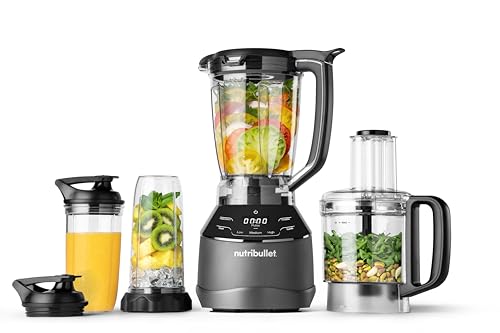
NutriBullet 4.5 (32.5k)

What We Like

  • Dual-use design handles both family batches and single-serve with one machine
  • 1200-watt motor is significantly more powerful than base NutriBullet Pro
  • Backward compatibility with existing NutriBullet cups is a practical plus

Trade-offs

  • Takes up more counter space than the personal NutriBullet
  • Pitcher doesn't perform at the same level as dedicated full-size blenders
Key Specifications
Motor 1200W
Pitcher Capacity 64 oz
Cup Capacity 32 oz
Speed Settings 3 + pulse + auto-clean

Buying Guide

The Complete Blender Buying Guide

Blender marketing runs on a single misleading number: peak horsepower. The spec that actually predicts whether your smoothie has chunks in it is sustained power under load — and the gap between machines that look identical on a shelf is enormous. This guide covers the decisions that matter: personal vs full-size, when the premium brands earn their price, and why container geometry beats wattage more often than you'd think.

Personal vs Full-Size: Decide by Servings, Not Ambition

Start with an honest count of how many people drink from your blender at once. If the answer is one, a personal blender like the NutriBullet Pro 900 is genuinely the better tool, not the compromise: you blend in the cup you drink from, there's no pitcher to wash, and the footprint fits a studio kitchen. The pattern we see constantly is the reverse mistake — a full-size machine bought 'to be safe' that gets used for one smoothie a day, with a 64-ounce pitcher washed daily for a 16-ounce drink.

Full-size earns its counter space when you blend for a household or cook with the machine — soups, sauces, batters, frozen desserts. The Ninja Professional's 72-ounce pitcher serves a family of four in one pass, and the Vitamix 5200's 64-ounce container handles a full pot of soup. If you're genuinely split between the two use cases, combo systems like the NutriBullet Blender Combo bolt a personal cup onto a full pitcher base — a reasonable compromise, with the caveat that the pitcher side never quite matches a dedicated full-size machine.

One more honest carve-out: if most of your blending is pureeing soup in the pot it cooked in, neither format is right. A stick blender like Cuisinart's cordless EvolutionX does that one job better than any countertop machine, for a fraction of the price, with no hot-liquid transfer risk.

Peak Horsepower Is Marketing — Sustained Power Is the Spec

Here's the trick behind the spec sheet: 'peak horsepower' measures a momentary surge at startup, not what the motor delivers thirty seconds into a frozen blend. That's how the Blendtec Classic 575 advertises 3.8 HP while the Vitamix 5200 lists 2.0 — and yet the two perform in the same league, because both sustain their power instead of fading when the load gets thick. Meanwhile, budget machines with impressive wattage numbers bog down, overheat, or trip thermal cutoffs exactly when the job gets hard.

The tasks that expose this gap are nut butter and fibrous greens. Almond butter requires a motor to grind a dense, low-liquid mass for several minutes without strain — the Vitamix and Blendtec do it routinely; the Ninja Professional, excellent for its price at ice and frozen fruit, openly struggles there. Kale and frozen mango blended to actually smooth (not flecked) is the other tell. If your blending stops at protein shakes and frozen-fruit smoothies, sustained power barely matters and a budget machine is the rational buy. If it includes nut butters, fibrous greens, or daily heavy use, it's the whole game.

When the Vitamix Premium Is Justified — and When It Isn't

The case for paying triple the Ninja's price rests on three things: capability, longevity, and warranty. Capability means hot soup blended from raw ingredients via friction heat, glass-smooth nut butters, and restaurant-texture purees — tasks mid-range machines do poorly or not at all. Longevity is documented, not claimed: Vitamix machines run for years in commercial smoothie bars, and the 10-year full warranty on the 5200 reflects that. Amortized over a decade of daily use, the math genuinely favors the premium machine.

But the premium tier has its own trap: paying for the wrong premium. The Vitamix E310 Explorian delivers the same 2.0 HP motor and blade quality as the 5200 at a meaningfully lower price — its 48-ounce container and 5-year warranty are the only real concessions, and for a one- or two-person household the smaller container is arguably better. At the other end, the A3500's touchscreen and app connectivity add hundreds of dollars over the E310 without blending anything the E310 can't. Buy the motor, not the interface. The interesting third option is the Breville Super Q: comparable power to either flagship, plus a noise-reducing enclosure that makes it the only high-performance blender you can run during a 6 a.m. conference call household.

Containers, Cleaning, and the Features That Decide Daily Use

Container geometry does more work than most buyers realize. Blendtec's WildSide+ jar uses an off-center fifth side to throw ingredients back into the blades, which is why it rarely needs a tamper; Vitamix's narrower containers create a tighter vortex but rely on the tamper for thick blends. Neither approach is wrong — but if you hate stopping to scrape and prod, the wide-jar design is a real quality-of-life difference. Check cabinet clearance too: the classic Vitamix 5200 stands tall enough to fight standard upper cabinets, which is exactly why low-profile containers exist.

Cleaning determines whether a blender gets used in month six. The self-clean routine — warm water, drop of dish soap, 30 seconds on high — works genuinely well on the Vitamix and Blendtec machines and on the Ninja's dishwasher-safe pitcher. Blade design matters here too: Blendtec's blunt blades can be hand-washed without the minor knife-fight that sharp-bladed pitchers involve.

What to skip: presets and connectivity as buying criteria. A smoothie button is a timer with branding — variable speed control, which the E310 and 5200 both have, replaces every preset and teaches you texture control in a week. And app-connected blending solves a problem nobody has while adding a dependency (app support) that may not outlive the machine. Spend the difference on the motor or keep it.

Common Questions

Frequently Asked Questions

Is a Vitamix worth the price?
For smoothie enthusiasts, nut butter makers, and home cooks who blend daily, yes. The 10-year warranty, commercial-grade motor longevity, and superior performance on demanding tasks (hot soups, nut milks, frozen desserts) justify the $350-$600 cost over a 5-10 year period. For occasional blending, a $100-$150 mid-range blender is sufficient.
Can I make hot soup in a blender safely?
Yes — high-powered blenders (Vitamix, Blendtec) can heat soup through friction alone. For standard blenders, blend hot liquids with the center cap removed and a folded towel held firmly on top to allow steam to escape. Never fill more than half full with hot liquid — pressure buildup can cause dangerous blowouts.
What's the difference between a personal blender and a full-size blender?
Personal blenders (Nutribullet, Magic Bullet) blend directly in the cup you drink from — convenient for daily smoothies. Full-size blenders handle larger quantities, hot liquids, and tougher blending tasks. Both fill different needs: personal blenders win on convenience, full-size on versatility.
How do I properly clean a blender to prevent bacteria buildup?
The fastest method: add warm water and a drop of dish soap, blend on high for 30 seconds, rinse. For deeper cleaning, disassemble the blade base monthly. Never soak blade assemblies — water infiltrates the bearing seal and causes rust. Most containers are top-rack dishwasher safe.
Why does my blender struggle with frozen fruit?
Insufficient liquid is the most common cause — add 1/2 cup of liquid first, then frozen fruit, to give the blades something to move. If the motor is underpowered (under 500W peak), frozen fruit will stall it. Let frozen fruit thaw for 5 minutes before blending in budget models. A tamper (available for Vitamix) solves this problem entirely.

Explore More