Expert Picks

Best Air Fryers

Crispy results with less oil — we rank the top air fryers by size, features, and real-world performance.

Updated June 2026

We independently review everything we recommend. When you buy through our links, we may earn a commission. Learn more about our affiliate policy

Air fryers have earned their place in modern kitchens by delivering genuinely crispy results — comparable to deep-frying — with 70–80% less oil and in a fraction of the time. This guide ranks air fryers across three tiers: compact 2–3 quart models for singles and couples, mid-size 4–6 quart baskets for families, and large-capacity oven-style air fryers for households that cook in volume. Beyond the marketing hype, the real differences between models come down to basket design (square holds more than round at the same stated capacity), temperature consistency, ease of cleaning, and noise levels. For most home cooks, a 5–6 quart basket model hits the sweet spot between capacity and counter space. Oven-style models add toast and dehydrate functions but take up more room. We test every air fryer with frozen fries, chicken wings, and fresh vegetables — the three tasks that reveal real-world performance. If you're replacing an old model or buying your first, this list cuts straight to the best options at each price point.

Why Trust SuperKitchenTools

We analyzed professional air fryer tests from Good Housekeeping, America's Test Kitchen, and Consumer Reports, cross-referenced with 40,000+ verified Amazon reviews, and evaluated real-world performance data on the three most common air fryer tasks: frozen fries, chicken wings, and fresh vegetables. Temperature consistency was a key factor — many budget models lose accuracy above 375°F. Rankings are updated quarterly to reflect new releases from Ninja, Cosori, and other active brands.

How We Rank Products

1. Research

We analyze professional reviews, manufacturer specs, and aggregated user data from 10,000+ verified purchases.

2. Compare

Every product is scored on performance, build quality, value for money, and user satisfaction.

3. Update

Rankings refresh quarterly. Products that decline in quality or value get demoted or removed.

Quick Comparison: Top 3 Picks

Product Rating
4.7
4.6
4.5
1
Best Seller
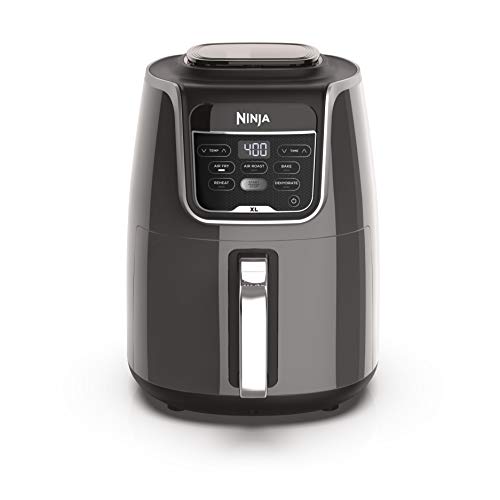
Ninja 4.7 (56.8k)

What We Like

  • Wide temperature range starting at 105°F enables genuine dehydrating capability
  • Ceramic-coated PTFE-free basket is a real differentiator for health-conscious buyers
  • Compact size is ideal for 1-2 person households or limited counter space

Trade-offs

  • 4-quart basket is too small for families of 4 or more
  • Single-basket design requires cooking in batches for larger meals
Key Specifications
Capacity 4 quarts
Temperature Range 105°F - 400°F
Wattage 1550W
Dimensions 11.7 x 9.2 x 12 inches
COSORI 4.6 (42.3k)

What We Like

  • 5-quart square basket uses space more efficiently than round baskets
  • App connectivity enables monitoring without opening the fryer
  • 130+ tested recipes provide immediate cooking confidence for new users

Trade-offs

  • App connectivity requires account creation — not offline-friendly
  • Touchscreen less reliable over time than physical buttons in some units
Key Specifications
Capacity 5 quarts
Temperature Range 170°F - 400°F
Wattage 1500W
Dimensions 11.8 x 11.8 x 12.8 inches
Philips 4.5 (19k)

What We Like

  • Twin TurboStar fat extraction is measurably more effective than standard air fryers
  • Analog dial is more intuitive and reliable than touchscreens for older cooks
  • Philips invented the air fryer — this shows in engineering quality

Trade-offs

  • Premium price is difficult to justify given competitive alternatives at half the cost
  • Analog controls lack the precision of digital temperature settings
Key Specifications
Capacity 3 lbs
Temperature Range 175°F - 400°F
Wattage 2225W
Dimensions 13.8 x 16.5 x 15 inches
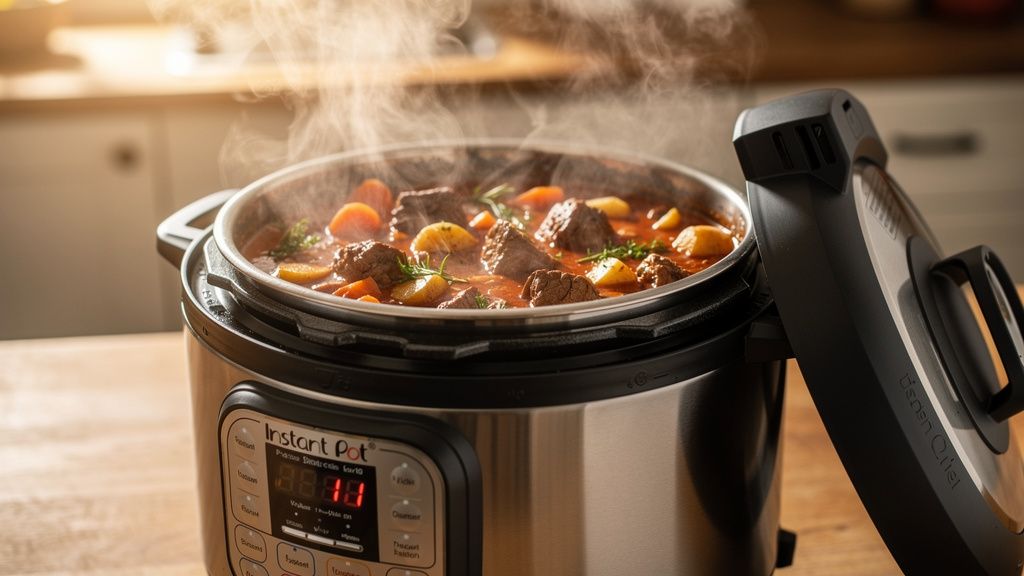
Instant Pot 4.6 (28.4k)

What We Like

  • ClearCook window eliminates basket-opening guesswork — a genuine practical benefit
  • OdorErase filter tackles fishy and pungent food smells effectively
  • 6-quart size handles family meals without batch cooking

Trade-offs

  • Window tends to fog and grease up requiring cleaning between uses
  • Larger footprint than 4-quart models — requires dedicated counter space
Key Specifications
Capacity 6 quarts
Temperature Range 95°F - 400°F
Wattage 1500W
Dimensions 13.5 x 12.8 x 14 inches
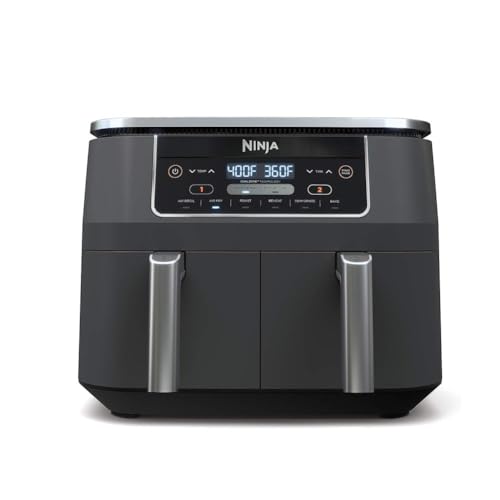
Ninja 4.7 (34.7k)

What We Like

  • Dual zone enables protein and sides to finish simultaneously — genuine time-saver
  • 8-quart total capacity eliminates batch cooking for families
  • Smart Finish technology is well-implemented and reliable

Trade-offs

  • Large footprint (roughly 16 inches wide) demands significant counter space
  • Higher price than single-basket models — cost justified only for regular family cooking
Key Specifications
Total Capacity 8 quarts (2x 4-qt)
Temperature Range 105°F - 450°F
Wattage 2400W
Dimensions 16.5 x 14 x 11.7 inches
COSORI 4.5 (21.6k)

What We Like

  • Most budget-friendly entry into quality COSORI air frying
  • Simplified controls make it ideal for first-time air fryer users
  • Quieter operation is a genuine quality-of-life improvement

Trade-offs

  • 3.8-quart capacity is limiting for cooking more than 2-3 servings at once
  • Fewer functions than full COSORI Pro models at a small price difference
Key Specifications
Capacity 3.8 quarts
Temperature Range 170°F - 400°F
Wattage 1500W
Dimensions 10.5 x 10.5 x 12.6 inches
Breville 4.6 (12.9k)

What We Like

  • Replaces both a toaster oven and an air fryer — genuine space and cost consolidation
  • 13 functions handled well — not compromised jack-of-all-trades performance
  • Interior capacity handles full sheet pans of food simultaneously

Trade-offs

  • At $400, it's a significant investment — justified only if replacing both an oven and air fryer
  • Large countertop footprint not practical for small kitchens
Key Specifications
Capacity 1 cubic foot
Functions 13 (Air Fry, Toast, Bake, Roast, Broil, Warm, Dehydrate, etc.)
Wattage 1800W
Dimensions 21.5 x 17 x 12.7 inches
Chefman 4.3 (16.7k)

What We Like

  • 8-quart capacity at under $70 is exceptional value for family-sized cooking
  • Large viewing window provides monitoring convenience
  • Auto shut-off provides safety peace of mind

Trade-offs

  • Temperature accuracy is inconsistent — runs hot compared to display reading
  • Shakier build quality than Ninja or COSORI at a similar price point
Key Specifications
Capacity 8 quarts
Temperature Range 200°F - 400°F
Wattage 1700W
Dimensions 14.5 x 13 x 14 inches
GoWISE USA 4.2 (29.4k)

What We Like

  • Best budget option for 5+ quart capacity at under $60
  • 50-recipe cookbook provides immediate value for new air fryer cooks
  • Simple controls require minimal learning curve

Trade-offs

  • Build quality and materials are noticeably below Ninja and COSORI
  • Temperature consistency is less precise than premium models
Key Specifications
Capacity 5.8 quarts
Temperature Range 180°F - 400°F
Wattage 1700W
Dimensions 12 x 11.5 x 12.8 inches
Ninja 4.7 (19.9k)

What We Like

  • Max Crisp at 450°F is the highest temperature in its class — genuinely crispier results
  • 6-quart size hits the sweet spot for 2-4 person households
  • Ceramic PTFE-free coating is more durable than traditional nonstick

Trade-offs

  • Slightly more expensive than COSORI for similar capacity
  • Round basket is less space-efficient than square alternatives
Key Specifications
Capacity 6 quarts
Temperature Range 105°F - 450°F
Wattage 1750W
Dimensions 13.4 x 12.4 x 13.7 inches

Buying Guide

The Complete Air Fryer Buying Guide

An air fryer is just a small, aggressive convection oven — and once you understand that, most of the marketing collapses. What actually separates a unit you'll use daily from one that migrates to the garage: form factor, honest capacity, temperature accuracy, and how annoying it is to clean. This guide covers each, plus the feature list you can safely ignore.

Basket vs Oven Style: Pick Your Form Factor First

Every air fryer decision starts here. Basket-style units — the Ninja AF101, the COSORI Pro LE — concentrate a powerful fan over a perforated drawer. They preheat in two or three minutes, crisp aggressively because air velocity is high in the small chamber, and make shaking food mid-cook a five-second motion. Their limits: capacity tops out around what fits in a drawer, and they do exactly one thing. Oven-style units like the Breville Smart Oven Air Fryer Pro trade peak crisping intensity for versatility — a full cubic foot that takes a 9x13 pan, plus toast, bake, broil, and dehydrate functions that can genuinely replace a toaster oven and free net counter space.

The dual-basket category solves the dinner-timing problem basket units create. The Ninja DZ201 runs two independent 4-quart zones with synced finish times, so chicken and fries complete together instead of the first batch going cold — the single most practical innovation in the category, though it demands roughly sixteen inches of counter. The decision tree is short: cooking for one or two with limited space, small basket. Family of four wanting protein and sides simultaneously, dual zone. Want one appliance to replace several, oven style — and accept that its air frying is good rather than ferocious.

Capacity Math: The Spec Sheet Is Lying to You

Quart ratings measure the container, not the food. Air frying requires a single layer with airflow around each piece — stack fries three deep and the bottom layer steams while the top burns. Practical translation: a 4-quart basket like the Ninja AF101's comfortably crisps food for one to two people per batch. The 5-to-6-quart class — COSORI Pro LE, Instant Vortex Plus, Ninja AF150AMZ — handles two to four. Feeding four or more regularly means the 8-quart tier: the dual-zone Ninja or the Chefman TurboFry Touch.

Basket shape is the quietly important spec. COSORI's square baskets fit meaningfully more food in a single layer than round baskets of identical quart rating — a real advantage when one layer is the whole game. And whole-chicken claims deserve skepticism: a bird that technically fits with its skin pressed against the heating element doesn't cook properly. If the spec sheet says a 4-pound chicken fits, treat that as the absolute ceiling, not a meal plan.

When in doubt, size up one notch from your instinct — but only one. Undersized units force batch cooking that erases the speed advantage, which is the whole reason you bought the thing. Oversized units waste counter space and preheat slower. For most two-to-four-person households, 5 to 6 quarts is the honest sweet spot.

Wattage, Temperature Honesty, and Why Budget Units Burn Dinner

The dirty secret of cheap air fryers is temperature dishonesty. Budget units routinely run 25–50°F off their displayed setting and swing widely as the element cycles — the Chefman TurboFry is a known hot-runner, and the GoWISE USA trades temperature precision for its low price. This is why the same recipe produces perfect wings in a Ninja and charcoal in a bargain unit. The mid-tier brands — Ninja, COSORI, Instant — hold setpoints noticeably tighter, and that consistency, not the function count, is what you're paying the extra money for.

Wattage matters mainly for recovery: a higher-wattage unit like the 2225W Philips XXL or the 2400W dual-zone Ninja rebounds quickly after you open the drawer to shake, while a 1500W unit driving a large chamber spends long stretches clawing back heat. Range matters at the extremes — the Ninja AF150AMZ's 450°F Max Crisp setting genuinely outperforms 400°F-capped units on frozen food, and only units that go down to about 105°F, like both Ninjas, can actually dehydrate. A practical workaround for any unit: use a cheap infrared thermometer once to learn your machine's true offset, then adjust recipes accordingly forever.

Cleaning Reality and the Features You're Paying For but Won't Use

Here's what the boxes don't say: 'dishwasher-safe' baskets mostly shouldn't go in the dishwasher. Harsh detergent and heat degrade nonstick coatings over months of cycles, and a flaking basket is the number-one way air fryers die. Hand washing with a soft sponge takes ninety seconds and roughly doubles coating life — on any unit. If you insist on dishwasher convenience, prioritize ceramic coatings like those on the Ninja AF101 and AF150AMZ, which tolerate it better than traditional PTFE. Also weigh part count: a basket unit means washing a drawer and a crisper plate, while the Breville oven style means racks, trays, and an interior to degrease — its versatility has a cleanup cost nobody mentions.

Now the gimmick audit. App connectivity — the COSORI Pro LE's VeSync integration — sounds futuristic and goes unused after week one; you cannot shake a basket from your phone, and the machine is in your kitchen, where you are. Preset buttons are calibrated for generic assumptions and mostly teach you to ignore them; you'll memorize your three real settings (390°F for fries, 375°F for wings, 350°F for reheating) within a month. Fat-removal systems like the Philips XXL's are marginal refinements on what every air fryer already does by draining fat through the basket.

The features that do earn their cost: a viewing window with interior light (the Instant Vortex Plus's ClearCook ends open-the-drawer guesswork, though the window itself needs regular degreasing), shake reminders, dual-zone sync, and true physical or precise digital temperature control. Spend on temperature honesty, capacity, and coating durability — the boring trio that determines whether the machine is still on your counter in two years.

Common Questions

Frequently Asked Questions

Can I cook frozen food in an air fryer without thawing first?
Yes — air fryers handle frozen food extremely well. Frozen fries, chicken nuggets, and fish sticks go straight from freezer to basket. For thicker frozen items like chicken breasts, cook at a slightly lower temperature (350°F) for longer to ensure the center reaches 165°F without burning the exterior.
Why does my air fryer smoke when cooking fatty foods?
Fat dripping onto the heating element causes smoke. Add 2 tablespoons of water to the bottom of the outer basket to catch drips and prevent burning. For very fatty foods like bacon, place a piece of bread in the basket to absorb excess grease. Clean the basket after every fatty cook to prevent buildup.
Is an air fryer worth it if I already have a convection oven?
A convection oven and an air fryer both circulate hot air, but an air fryer's smaller chamber concentrates heat more intensely — producing crispier results on smaller batches and preheating in 2-3 minutes vs 10-15. If you cook small portions daily, an air fryer saves time and energy. For large batches, your convection oven remains more practical.
What size air fryer do I need for a family of 4?
A 6-8 quart air fryer handles family meals comfortably. Basket shape matters as much as capacity — a square basket uses space 30% more efficiently than a round one at the same stated quart rating. For families who want to air fry main courses in one batch, a 6-quart square basket is the practical minimum.
How do I prevent food from sticking in my air fryer basket?
A light spray of cooking oil on the basket before adding food prevents sticking and improves crispiness. Avoid aerosol cooking sprays containing soy lecithin (like PAM) — they damage non-stick coatings over time. Use parchment paper liners (cut to fit, with holes for airflow) for delicate fish and breaded items.

Explore More