Short answer: buy an Instant Pot if you cook beans, stews, tough cuts, stock, or rice — anything needing long, moist heat compressed into an hour. Buy an air fryer if you live on frozen foods, wings, reheated leftovers, and small-batch roasted vegetables. These are not competitors. A pressure cooker uses trapped steam to tenderise; an air fryer uses fast dry air to crisp. They do physically opposite things, and neither can do the other’s job. The real question isn’t which is better — it’s which kind of cooking you actually do on a Tuesday night.
Instant Pot vs air fryer at a glance
| Instant Pot (Pressure Cooker) | Air Fryer | |
|---|---|---|
| How it cooks | Trapped steam under pressure — moist heat | High-velocity hot air — dry heat |
| Peak temperature | ~250°F at 15 psi | 350-450°F |
| What it does to food | Tenderises, hydrates, extracts | Browns, crisps, dehydrates surface |
| Genuinely fast at | Beans, tough cuts, stock, rice, risotto | Frozen food, wings, reheating |
| Cannot do | Brown or crisp anything | Tenderise tough cuts, cook beans |
| Real time to plate | 10 min pressurise + cook + release | Press start, done in 10-20 min |
| Hands-off? | Yes — walk away entirely | Mostly — shake once or twice |
| Batch size | 6-quart feeds 4-6 easily | Single layer, 1-2 servings |
| Counter footprint | Tall, bulky lid | Wide-ish, lower profile |
| Learning curve | Moderate — pressure, release types | Near zero |
| Noise / steam | Quiet, then a loud steam release | Constant fan hum, no steam |
| Best for | Batch cooking, budget cuts, meal prep | Weeknights, singles, crisping |
What does a pressure cooker actually do?
Sealing a pot traps steam, which raises internal pressure — and pressure raises the boiling point of water. Instead of stalling at 212°F, the liquid inside an Instant Pot reaches roughly 250°F. That extra 38°F is the entire mechanism: collagen breaks down into gelatin far faster, dried beans hydrate in a fraction of the time, and stock extracts in an hour instead of six.
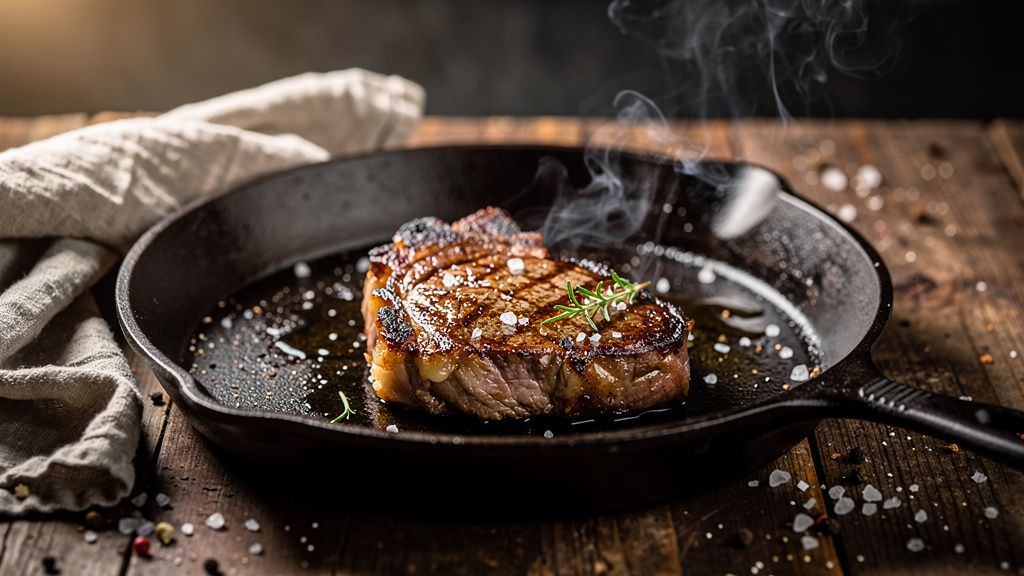
Everything in that chamber is wet — a feature for a pot roast and a hard limit everywhere else. No pressure cooker will ever brown or crisp anything, because browning needs a dry surface above 300°F and this is saturated steam at 250°F. Models like the Instant Pot Duo 7-in-1, 6 Quart include a sauté function precisely because you have to brown before you seal the lid.
What does an air fryer actually do?
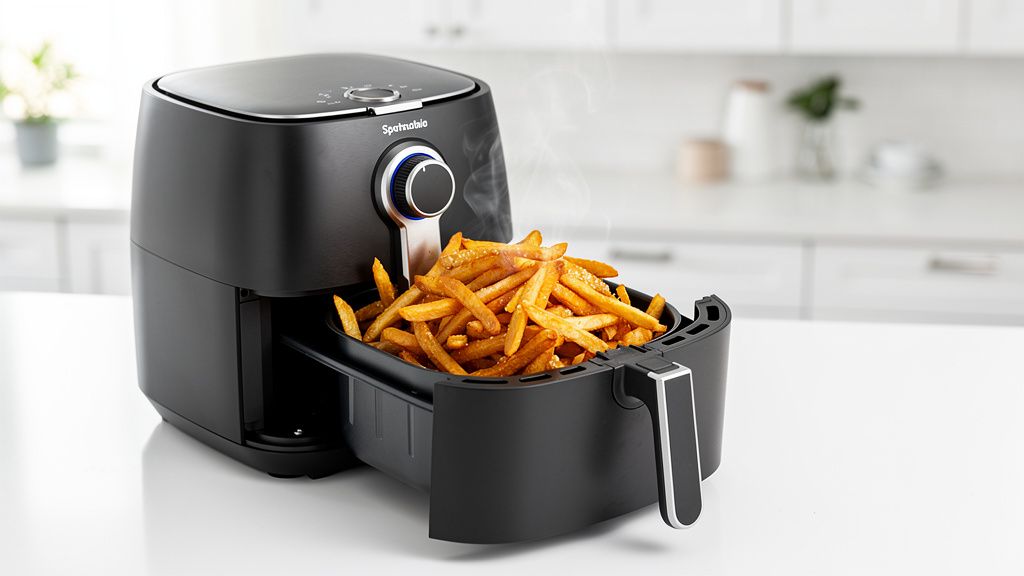
The opposite. An air fryer is a compact convection oven with an aggressive fan — nothing is fried, there is no oil bath. Fast-moving hot air strips moisture off the surface, and once that surface is dry and hot enough the Maillard reaction kicks in and you get browning and crunch.
Which means it is powerless against a chuck roast or a bag of dried chickpeas: dry heat at 400°F scorches the exterior long before the collagen inside surrenders. A Ninja AF101 Air Fryer, 4 Quart or Cosori Pro LE Air Fryer, 5 Quart will crisp already-tender food beautifully and do nothing useful to a brisket. We compared the format against a full-size oven in air fryer vs oven — same physics, different box.
Is an Instant Pot actually fast?
Fast for what it does, not fast in absolute terms — and this is the most common disappointment. A recipe that says “8 minutes” means 8 minutes at pressure. It excludes the 8-15 minutes spent building pressure, and the release: quick release vents in a minute or two, but a natural release — required for beans, big cuts, and anything foamy — takes 10-25 minutes on its own.
So a “20-minute” pot roast is realistically 50 minutes door to door. Still a fraction of the three hours it takes in an oven, which is the honest framing: pressure cooking collapses long cooking, it doesn’t beat short cooking. An air fryer is fast in the everyday sense — no preheat, food out in 10-20 minutes. Dinner in 15 minutes flat is the air fryer’s; a Sunday-quality braise on a Wednesday is the Instant Pot’s, by hours.
Where the Instant Pot pulls ahead is attention: once sealed it is fully hands-off and holds warm indefinitely. An air fryer wants a shake halfway and starts overcooking the moment it finishes.
What does each genuinely win at?
Instant Pot wins outright at:
- Dried beans and legumes — no overnight soak, done in under an hour. Nothing else comes close.
- Tough, cheap cuts — chuck, shoulder, shanks, oxtail. This is where it pays for itself.
- Stock and broth — an hour of pressure extracts what normally takes most of a day.
- Rice, grains, risotto, steel-cut oats — set and walk away.
- Batch meal prep — four to six portions in one shot.
- Hard-boiled eggs that actually peel. Unglamorous, but it turns owners into evangelists.
Air fryer wins outright at:
- Frozen foods — fries, nuggets, spring rolls. Engineered to crisp; nothing does it faster.
- Wings and skin-on proteins — high airflow renders fat and crisps skin without a broiler.
- Reheating — pizza, fried chicken, roasted vegetables come back crisp instead of soggy.
- Small-batch roasting — one or two servings of broccoli, tofu, or chickpeas without heating a full oven.
There is essentially no overlap. That’s the point.
Which takes more counter space and more learning?
A 6-quart Instant Pot is tall and top-heavy, and the lid doesn’t nest — it sits on the pot, adding height, or lives loose in a cabinet. Air fryers are shorter but wider, and basket models mostly disappear into a lower cupboard. Neither is small; count both as permanent counter residents.
Learning curve isn’t close. The air fryer is near zero: temperature, time, shake once. The Instant Pot has a real onboarding period — pressure build time, quick versus natural release, the minimum thin liquid needed to reach pressure, the max fill line with foaming foods. Our pressure cooker guide for beginners covers the release types and burn-notice fixes that trip people up first.
Noise cuts the other way. An Instant Pot is nearly silent, then startles the room with a jet of steam at release — worth knowing if the kitchen is near a sleeping baby. An air fryer hums constantly but vents no steam and won’t fog a window.
What about combo units — should you just buy both in one?
The tempting answer, and it deserves an honest look. Units like the Ninja FD401 Foodi 12-in-1 and the Instant Pot Pro Crisp 11-in-1 genuinely do both jobs — pressure cook with one lid, air crisp with a second — and the pressure-then-crisp workflow (carnitas, crispy-skin thighs, ribs finished under dry heat) is real, something no single-function machine manages alone.
The trade-offs are equally real:
- Two lids. One hinged, the other a heavy separate pressure lid you must store somewhere. That drawer space isn’t free.
- Bulk. Taller and heavier than either standalone appliance.
- Price. A clear premium over a basic pressure cooker — often more than a decent pressure cooker plus a basic air fryer bought separately.
- You rarely need both on the same night. Braise nights and frozen-fries nights are different nights, and the crisping lid gets used far less than buyers imagine.
- Compromised air frying. A deep round pot is a worse shape for airflow than a shallow basket. It crisps, just not as evenly.
A combo is genuinely worth it when counter space is your binding constraint and you can own exactly one appliance, or you cook pressure-then-crisp recipes often. Otherwise buy the machine that matches your cooking and add the second only if you actually miss it.
Which should you buy first?
- Beans, stews, braises, stock, or big-batch meal prep: Instant Pot, no hesitation. The Instant Pot Duo 7-in-1, 6 Quart is the default pick; the Instant Pot Duo Nova, 6 Quart adds an easier auto-sealing lid.
- Mostly frozen food, wings, and reheated leftovers: air fryer. The Ninja AF101 or Cosori Pro LE do everything you need under $100.
- Single person or couple, small fast weeknight portions: air fryer first. The Instant Pot’s batch advantage is wasted on two people; its time cost isn’t.
- Cooking for four or more, or buying cheap cuts on purpose: Instant Pot first. It changes what you can afford to cook.
- Room for exactly one appliance, both functions wanted: a combo like the Ninja FD401 Foodi 12-in-1 or Instant Pot Pro Crisp, accepting the trade-offs above.
- You want a wider, shallower pot: the Instant Pot Rio Wide, 6 Quart — a real ergonomic upgrade if the standard tall pot annoys you.
Compare specs side by side in our best pressure cookers and best air fryers rankings, then check current pricing on Amazon — both categories discount often.
Frequently asked questions
Can an air fryer replace an Instant Pot?
No. Dry heat cannot tenderise tough cuts or cook dried beans — those need moist heat and time under pressure. An air fryer burns the outside of a chuck roast long before the inside becomes tender. Opposite cooking methods, not overlapping ones.
Is an Instant Pot really faster than a regular pot?
For long-cooking foods, dramatically — beans in under an hour, stock in one hour instead of six, a braise in 50 minutes instead of three hours. But add 10-15 minutes to pressurise and up to 25 for a natural release, so it never beats a 15-minute stir-fry. America’s Test Kitchen has published extensive pressure-cooker timing tests by ingredient.
Are Instant Pot air fryer combos worth it?
Only if counter space is your hard limit, or you regularly cook pressure-then-crisp recipes like ribs and carnitas. Otherwise you pay a premium, store a second heavy lid, and get slightly worse air frying, because a deep round pot handles airflow poorly.
Which is better for meal prep?
The Instant Pot, clearly. A 6-quart pot produces four to six portions of beans, chili, shredded chicken, or grains in one hands-off run. Air fryers cook in single layers, so meal-prepping means several sequential batches.
Do I need both an Instant Pot and an air fryer?
Many households genuinely use both, because they cover different halves of the week — braises and batch cooking on one side, frozen food and reheating on the other. But buy them one at a time. Start with whichever matches how you cook now, and add the second only when you notice a real gap.