Short answer: buy a cast iron skillet if you want to sear steaks, roast in the oven, and own one pan for decades — it takes brutal heat and only gets better with use. Buy a nonstick pan if you cook eggs, flaky fish, or low-fat meals and want food to slide off with a paper-towel cleanup. They are not rivals on a quality ladder; they are two tools for opposite jobs. The honest truth most “versus” articles bury: the right answer for most kitchens is both, and a good version of each costs less than one premium do-everything pan.
Cast iron vs nonstick at a glance
| Cast Iron | Nonstick | |
|---|---|---|
| Max heat | Extreme — sears, oven-safe to 500°F+ | Limited — coating degrades above ~500°F |
| Searing / browning | Excellent — best crust of any pan | Poor — no fond, weak browning |
| Eggs / fish / delicate food | Fair once seasoned | Excellent — nothing sticks |
| Lifespan | Decades, effectively forever | 3–5 years typical, coating wears out |
| Maintenance | Season, hand-wash, dry, oil | Gentle — no metal tools, low heat |
| Oven & broiler | Yes, fully | Handle-dependent, coating-limited |
| Induction | Yes (magnetic iron) | Only if labeled induction-ready |
| Weight | Heavy | Light |
| Price range | Budget to premium | Cheap to mid — treat as consumable |
What’s the real difference between cast iron and nonstick?
It comes down to the cooking surface. Cast iron is a single slab of iron with a seasoning layer — polymerized oil baked onto the metal — that becomes naturally stick-resistant over time. It stores and radiates heat like almost nothing else, which is why it browns and crisps so well.
Nonstick is aluminum (light, fast-heating) coated in a fluoropolymer, usually PTFE — the material originally branded as Teflon. That coating is chemically slick, so food releases with almost no fat. But it is a surface treatment, not the pan itself, and it wears out.
That single distinction drives everything: cast iron is built for high heat and permanence, nonstick for gentle heat and effortless release. A Lodge 12-inch cast iron skillet and a $30 nonstick pan aren’t competing — they’re covering different halves of your stovetop.
Which sears better?
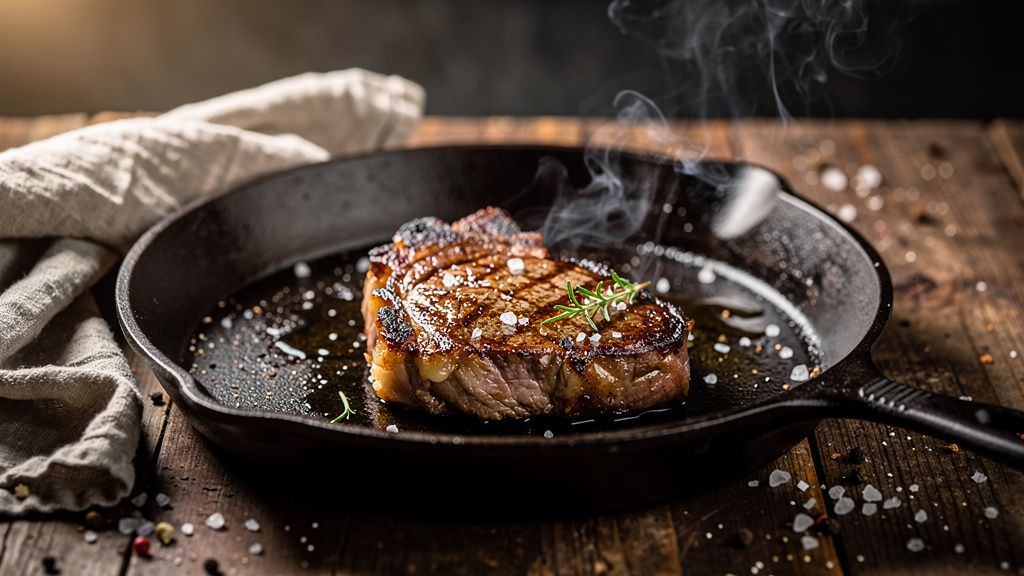
Cast iron, and it isn’t close. A hot cast iron pan holds its temperature when a cold steak hits it, so the surface keeps browning instead of stalling. That thermal mass is what builds a deep, even crust and the browned fond you deglaze into a pan sauce. America’s Test Kitchen has repeatedly ranked cast iron among the best searing surfaces for exactly this reason.
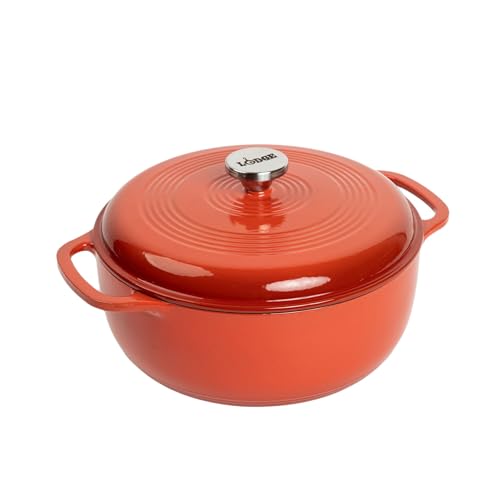
The enameled Staub 12-inch cast iron skillet delivers the same searing mass with a smoother surface, and a cast iron Dutch oven extends that heat retention to braises and bread.
Nonstick is the opposite. Manufacturers cap it at medium heat because the coating breaks down when overheated, so it can’t get hot enough for a real sear — and even if it could, the slick surface won’t develop fond. Ask a nonstick pan to sear and you get gray, steamed meat.
Which is better for eggs, fish, and low-fat cooking?
Nonstick, decisively. An omelet folds cleanly, a fried egg lifts in one piece, and delicate fish skin releases instead of tearing. You can cook with almost no oil, which matters if you’re watching fat. Cleanup is a wipe with a paper towel.
Seasoned cast iron can do eggs — a well-maintained Victoria 8-inch cast iron skillet handles them fine — but it takes a hot pan, enough fat, and a seasoning layer that has matured over months. Nonstick does it perfectly on day one with zero technique. For the person who makes scrambled eggs every morning, nonstick simply wins.
Are nonstick coatings safe? The PTFE and PFOA question
This deserves a straight answer. Two things get conflated:
- PFOA was a processing chemical once used to make PTFE. It was a genuine health concern — and it has been phased out. Since 2015, cookware sold in the US is manufactured PFOA-free, so any modern nonstick pan you buy today does not contain it.
- PTFE, the coating itself, is considered stable and inert at normal cooking temperatures. According to the American Cancer Society, there are no proven risks to humans from using PTFE cookware as intended.
The real rule is heat. Overheat an empty nonstick pan past roughly 500°F and the coating can degrade and release fumes — so never preheat one empty on high, and leave searing to cast iron. Used within its temperature range, modern nonstick is fine. Cast iron sidesteps the debate entirely with no coating at all.
Which lasts longer?
No contest: cast iron is effectively immortal. People inherit pans that are a century old, rusted ones restore with steel wool and fresh seasoning, and the surface improves with use rather than wearing out. Buy one good skillet and it may outlive you.
Nonstick is a consumable. Even careful use wears the coating down over three to five years — the surface loses its release, and once it’s scratched or flaking, the pan is done. This is the single most important mental shift: cast iron is an investment, nonstick is a replaceable part.
What to skip: expensive nonstick and the “one pan does it all” myth
Two traps here.
First, don’t overspend on nonstick. Because the coating wears out regardless of price, a $120 “premium” nonstick pan lands in the trash on roughly the same timeline as a $30 one. The smart play is a solid mid-priced nonstick you treat as a 3-to-5-year consumable — no metal utensils, no high heat, hand wash — and replace without guilt when it fades. Pouring money into a pan designed to die is the most common cookware mistake we see.
Second, stop hunting for the one pan that does everything. It doesn’t exist. Cast iron can’t do a delicate omelet on day one; nonstick can’t sear a steak, ever. The people frustrated with their cookware almost always own one pan trying to cover both jobs.
The fix is cheap: one cast iron skillet plus one honest mid-range nonstick covers nearly everything a home cook does, often for less than a single high-end pan. See how the iron picks stack up in our best cast iron rankings.
Does either work on induction?
Cast iron: always. Iron is magnetic, so every cast iron and enameled cast iron pan works on an induction cooktop — its heavy base is actually ideal for it. The Lodge Pro-Logic 10-inch skillet and any Lodge or Staub piece drops straight onto induction with no fuss.
Nonstick: only if it says so. Aluminum isn’t magnetic, so a nonstick pan works on induction only when the maker bonds a magnetic steel disc into the base and labels it “induction-ready.” Check before you buy — a plain aluminum nonstick pan simply won’t heat on an induction hob.
Which should you choose?
- You sear, roast, bake, and want a pan for life: cast iron. Start with a 12-inch Lodge; the enameled Staub if you want zero seasoning upkeep.
- You live on eggs, fish, pancakes, and fast cleanup: a good mid-range nonstick, treated as a consumable.
- You have one burner of patience for maintenance: nonstick is lower-effort day to day; cast iron rewards a little ritual.
- You cook on induction: cast iron works universally; only buy nonstick labeled induction-ready.
- Most people: both. One cast iron skillet and one nonstick pan is the setup that actually ends cookware frustration — and it’s genuinely affordable.
New to cast iron and worried about the upkeep? Our cast iron care guide walks through seasoning, cleaning, and rust rescue in plain steps — it’s far easier than the internet makes it sound.
Frequently asked questions
Is cast iron or nonstick healthier?
Both are safe when used correctly. Modern nonstick is PFOA-free and inert at normal cooking temperatures — the only real risk is overheating an empty pan, so keep it to medium heat. Cast iron has no coating at all and even adds a small amount of dietary iron to food. If avoiding coatings entirely gives you peace of mind, cast iron is the choice; otherwise both are fine.
Can you cook eggs in cast iron?
Yes, but it takes a well-seasoned pan, enough fat, and a properly preheated surface. A mature seasoning layer releases eggs cleanly, though it never quite matches nonstick’s day-one ease. For daily eggs with minimal effort, nonstick is more forgiving; for the occasional fried egg, seasoned cast iron does the job.
How long does a nonstick pan last?
Typically three to five years with careful use — no metal utensils, no high heat, gentle hand washing. The coating gradually loses its release and eventually scratches or flakes, at which point the pan should be replaced. Because lifespan barely changes with price, buy a solid mid-range pan and treat it as a consumable rather than a lifetime purchase.
Does cast iron work on an induction cooktop?
Always. Cast iron is magnetic, so every skillet and enameled piece works on induction, and its heavy base pairs especially well with it. Nonstick works on induction only when it has a bonded magnetic base and is labeled “induction-ready” — plain aluminum nonstick won’t heat.
Do I really need both cast iron and nonstick?
For most home cooks, yes — and it’s cheaper than it sounds. Cast iron handles searing, roasting, and high-heat cooking; nonstick handles eggs, fish, and low-fat, low-maintenance cooking. Neither does the other’s job well, so one of each covers nearly everything, often for less than a single premium do-it-all pan.