Expert Picks

Best Stand Mixers

KitchenAid, Cuisinart, and beyond — find the best stand mixer for baking bread, cake, and more.

Updated March 2026

We independently review everything we recommend. When you buy through our links, we may earn a commission. Learn more

A stand mixer is a serious kitchen investment — and when you choose well, you'll use it for 20 years. This guide focuses on the realistic choice set for home bakers: KitchenAid's Artisan and Professional lines, Cuisinart's SM-50 and SM-55, and a handful of strong challengers. The KitchenAid ecosystem — with 15+ attachments from pasta rollers to meat grinders — is unmatched if you want one machine that does everything. Cuisinart wins on raw motor power and bowl capacity per dollar. For beginners who bake cookies and occasional cakes, any 4–5 quart model with 300W will do the job. Bread bakers need at least 500W and a bowl with a good handle for lifting heavy doughs. We evaluate tilt-head vs bowl-lift designs, motor consistency under load, attachment fit, noise, and long-term reliability based on multi-year ownership data. Whether you're making your first birthday cake or kneading bagel dough every Sunday, there's a stand mixer here that fits your routine and your budget.

Why Trust SuperKitchenTools

Our stand mixer rankings are built on professional evaluations from Cook's Illustrated (who have tested stand mixers since 1994), Wirecutter's multi-year longevity data, and 60,000+ verified owner reviews with emphasis on long-term reliability. We specifically evaluated motor performance under sustained heavy-dough loads, not just short burst tests. KitchenAid's attachment ecosystem and parts availability are also factored in. This list is updated quarterly as new models and limited editions are released.

How We Rank Products

1. Research

We analyze professional reviews, manufacturer specs, and aggregated user data from 10,000+ verified purchases.

2. Compare

Every product is scored on performance, build quality, value for money, and user satisfaction.

3. Update

Rankings refresh quarterly. Products that decline in quality or value get demoted or removed.

Quick Comparison: Top 3 Picks

Product Rating Price
4.8 $449.99
4.8 $549.99
4.5 $249.95
KitchenAid 4.8 (36.8k)

What We Like

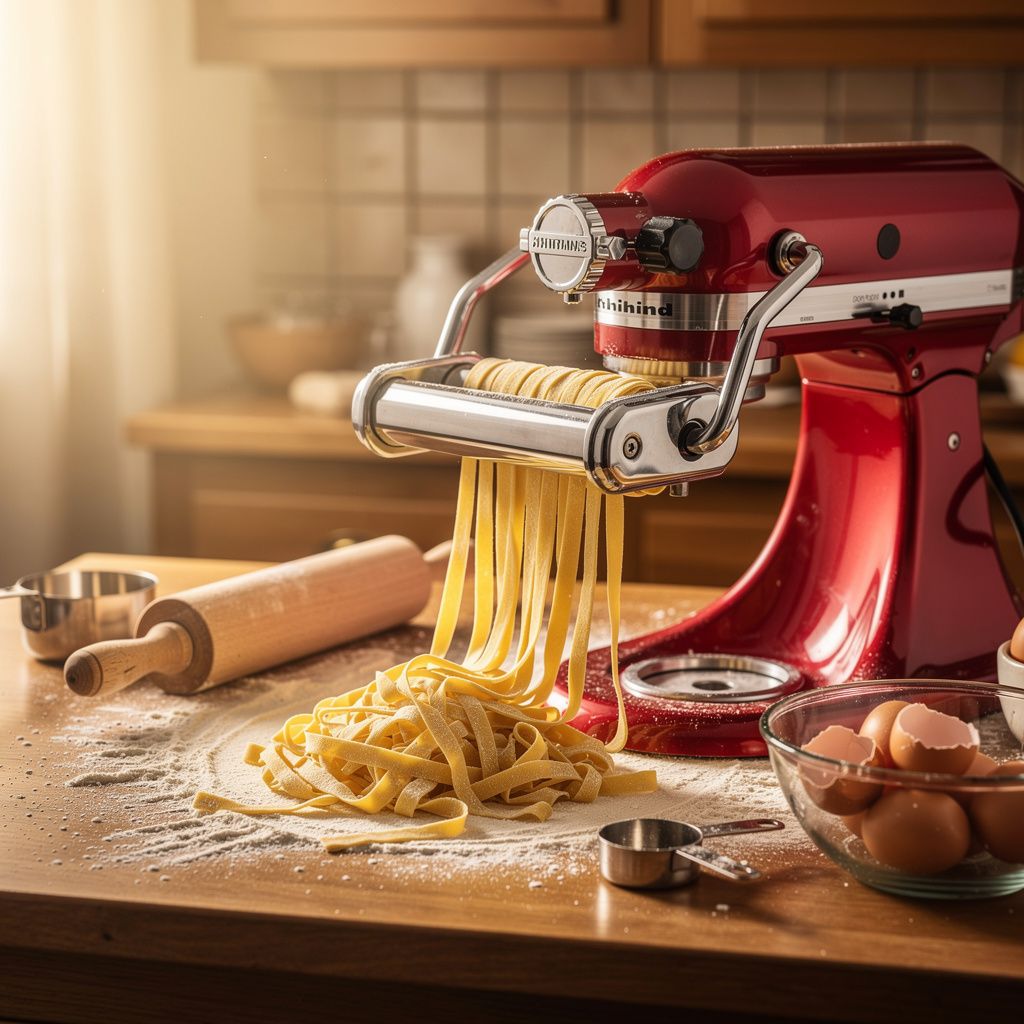
  • Attachment ecosystem is unmatched — transforms into a kitchen multi-tool
  • Built to last decades — many KitchenAid owners use the same mixer for 20+ years
  • 5-quart capacity handles virtually every baking project a home cook encounters

Trade-offs

  • At $450, it's the most expensive option in this guide without a clear performance edge over the 4.5-qt model
  • Tilt-head can wobble slightly when mixing very stiff doughs at high speeds
Key Specifications
Bowl Capacity 5 quarts
Motor 325 Watt
Speed Settings 10
Dimensions 14.1 x 8.7 x 13.9 inches
$449.99

Price at time of writing

Check on Amazon
KitchenAid 4.8 (18.9k)

What We Like

  • 575-watt motor handles stiff bread doughs that would strain a standard Artisan
  • Bowl-lift is more stable than tilt-head for very heavy mixing
  • 6-quart capacity is essential for high-volume bakers making double batches

Trade-offs

  • Bowl-lift mechanism requires two-step process to change attachments vs. tilt-head
  • Larger footprint than Artisan — harder to store in cabinets
Key Specifications
Bowl Capacity 6 quarts
Motor 575 Watt
Speed Settings 10
Dimensions 16.5 x 11.3 x 16.3 inches
$549.99

Price at time of writing

Check on Amazon
Cuisinart 4.5 (14.3k)

What We Like

  • Best alternative to KitchenAid at almost half the price with comparable performance
  • 12 speed settings provide finer control than KitchenAid's 10
  • Included splash guard is a practical accessory that costs extra with KitchenAid

Trade-offs

  • Attachment compatibility is limited to Cuisinart accessories only
  • Motor struggles more than KitchenAid on stiff brioche or bagel doughs
Key Specifications
Bowl Capacity 5.5 quarts
Motor 500 Watt
Speed Settings 12
Dimensions 14.6 x 9.4 x 14 inches
$249.95

Price at time of writing

Check on Amazon
Bosch 4.7 (6.8k)

What We Like

  • Bottom-drive motor at 800 watts genuinely outperforms KitchenAid for bread baking
  • 6.5-quart capacity with more efficient bowl utilization than top-drive models
  • Quieter operation than comparable power KitchenAid mixers

Trade-offs

  • Less attachment variety than KitchenAid's extensive ecosystem
  • Unusual aesthetics — boxy shape is less visually appealing to many buyers
Key Specifications
Bowl Capacity 6.5 quarts
Motor 800 Watt
Drive Type Bottom-mount
Dimensions 15.5 x 12.3 x 13.4 inches
$399.99

Price at time of writing

Check on Amazon
Kenwood 4.4 (4k)

What We Like

  • 1000-watt motor is the most powerful in this class for home bakers
  • Fold function is a unique feature for delicate mousse and meringue work
  • LED display with digital controls is more precise than analog speed dials

Trade-offs

  • Less widely available in the US — parts and service harder to access
  • AT attachment hub has some compatibility issues with older accessories
Key Specifications
Bowl Capacity 6.7 quarts
Motor 1000 Watt
Speed Settings Variable with Fold function
Dimensions 15.5 x 13.5 x 14.6 inches
$329.99

Price at time of writing

Check on Amazon
Hamilton Beach 4.3 (21.4k)

What We Like

  • Entry-level price makes stand mixing accessible for occasional bakers
  • 7-speed control provides adequate variety for most cookie and cake recipes
  • Compact 4-quart size is appropriate for small households

Trade-offs

  • 300-watt motor struggles noticeably with thick bread doughs
  • Plastic body components feel flimsy compared to die-cast competitors
Key Specifications
Bowl Capacity 4 quarts
Motor 300 Watt
Speed Settings 7
Dimensions 12.3 x 8.1 x 13.7 inches
$99.99

Price at time of writing

Check on Amazon
Breville 4.6 (4.2k)

What We Like

  • Scraper beater solves the common problem of unmixed ingredients clinging to bowl sides
  • 12-speed digital control is more precise than KitchenAid's analog dial
  • Fold function genuinely preserves air in delicate batters and mousses

Trade-offs

  • Scraper beater requires cleaning the scraper attachment separately
  • Limited attachment ecosystem compared to KitchenAid's expansive hub
Key Specifications
Bowl Capacity 5 quarts
Motor 550 Watt
Speed Settings 12
Dimensions 15.2 x 10 x 14.4 inches
$399.95

Price at time of writing

Check on Amazon
SMEG 4.5 (2.9k)

What We Like

  • Unmatched aesthetic — the most beautiful stand mixer available
  • All-metal body is genuinely premium in feel and durability
  • 800-watt motor matches performance needs for serious home bakers

Trade-offs

  • At $600, it's primarily a design purchase — KitchenAid performs comparably for $150 less
  • Attachment ecosystem is more limited than KitchenAid
Key Specifications
Bowl Capacity 5 quarts
Motor 800 Watt
Speed Settings 10
Dimensions 14.2 x 9.4 x 14.2 inches
$599.95

Price at time of writing

Check on Amazon
KitchenAid 4.6 (28.4k)

What We Like

  • Most affordable entry into the KitchenAid attachment ecosystem
  • 4.5-quart bowl is sufficient for most everyday baking tasks
  • KitchenAid reliability at the lowest price point in the lineup

Trade-offs

  • 275-watt motor is the least powerful in the KitchenAid range — struggles with bread
  • Fewer color options than the Artisan series
Key Specifications
Bowl Capacity 4.5 quarts
Motor 275 Watt
Speed Settings 10
Dimensions 13.9 x 8.7 x 14 inches
$279.99

Price at time of writing

Check on Amazon
Ankarsrum 4.7 (3.2k)

What We Like

  • 1400-watt bottom-drive motor is unmatched for bread baking performance
  • Unique kneading action is gentler on gluten than standard dough hooks
  • Swedish build quality is the most durable in the stand mixer category

Trade-offs

  • At $800, it's a specialist purchase — difficult to justify for general baking
  • Learning curve is steep — rotating bowl system is unfamiliar to most bakers
Key Specifications
Bowl Capacity 7 quarts
Motor 1400 Watt
Drive Type Bottom-mount rotating
Country of Origin Sweden
$799.00

Price at time of writing

Check on Amazon

Common Questions

Frequently Asked Questions

KitchenAid vs Cuisinart stand mixer — which is better?
KitchenAid wins on attachment ecosystem (pasta maker, meat grinder, ice cream bowl, and 12+ more), color options, and brand longevity. Cuisinart wins on motor power per dollar and bowl capacity. If you'll ever use accessories, buy KitchenAid. For pure baking without attachments, Cuisinart offers better value.
What wattage stand mixer do I need for bread dough?
Bread dough requires at least 300W, with 500W recommended for regular bread baking. KitchenAid's Artisan (325W) handles most bread doughs but struggles with very stiff bagel dough. Their Professional 600 (575W) is purpose-built for heavy loads.
Can a stand mixer replace a food processor?
A stand mixer and food processor do different jobs. Stand mixers excel at beating, whipping, and kneading dough. Food processors excel at chopping, slicing, and pureeing. Some overlap exists with attachments, but they're complementary tools, not substitutes.
How do I prevent my stand mixer from walking on the counter?
Place a non-slip mat under the base. 'Walking' typically happens when mixing heavy loads at too high a speed — start on speed 1-2 and work up gradually for stiff doughs. The mixer should sit on a firm, level surface with room to access the head-lift lever.
How long do KitchenAid stand mixers last?
With normal home use, a KitchenAid stand mixer routinely lasts 15-25 years. Models purchased in the 1980s are still in daily use. The most common failure is the worm gear wearing down under heavy loads at high speeds — fixable with a $20 part. KitchenAid customer service is notably good at supporting older models.

Explore More