Buying Guide
The Complete Baking Tools Buying Guide
Baking punishes improvisation more than any other kind of cooking, which is why tool quality shows up directly in your results: a warped pan bakes uneven cookies, a packed cup of flour ruins a cake, and no amount of skill compensates. This guide covers the handful of purchases that measurably improve what comes out of your oven — and the drawer of decorating clutter that won't.
Start With a Scale, Not a Cup
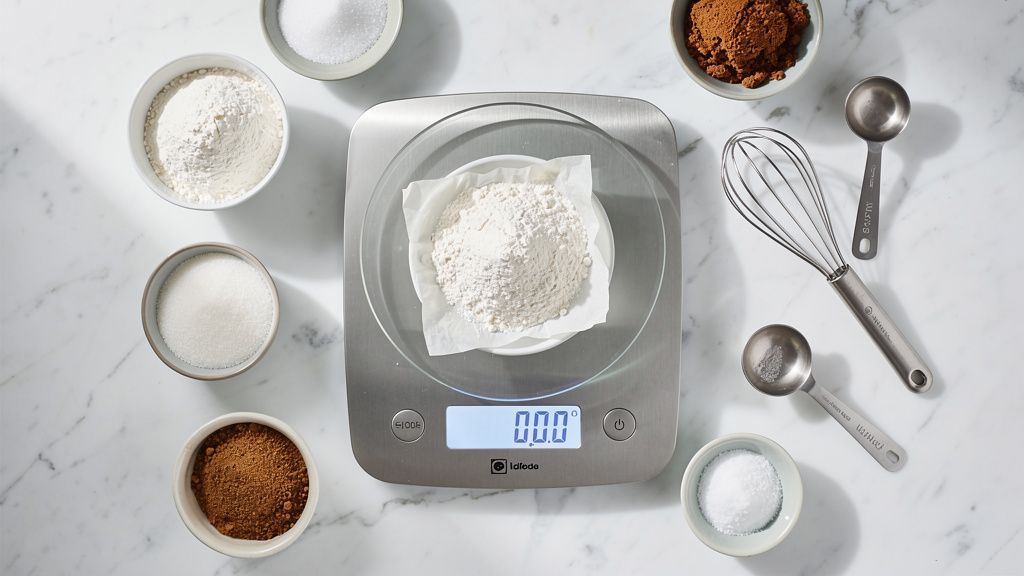
The single biggest upgrade in home baking costs less than a decent cake pan and isn't a baking tool at all: a digital scale. A cup of flour can weigh anywhere from 120 to 160 grams depending on how it was scooped — a 30% swing in the main structural ingredient of everything you bake. That variance explains most dense cakes, dry cookies, and gummy bread far better than oven temperature or technique does. Weighing in grams removes the variable entirely, and it's faster: one bowl on the scale, tare between ingredients, done.
Volume tools still have a place, but a narrower one than most kitchens assume. Liquids measure fine by volume — a set like the OXO angled measuring cups, with markings you can read from above while pouring, handles milk, oil, and water without stooping to counter level. Reserve cups for liquids and small amounts; weigh everything else. If a recipe gives only volumes, the standard conversions (a cup of all-purpose flour at 120 grams, a cup of granulated sugar at 200) make it weighable in seconds.
Temperature is the other measurement most bakers skip. Bread is done at an internal temperature, not a clock time, and custards break within a 10-degree window. An instant-read probe like the ThermoWorks Thermapen One settles bread doneness, tempered chocolate, and sugar stages with the same tool — overkill for occasional cookies, transformative for anyone baking weekly.
Sheet Pans: Why the Boring Aluminum One Wins
There is unusual consensus among professional bakers about sheet pans, and it points at one unglamorous product: the Nordic Ware Natural Aluminum Half Sheet. Pure aluminum spreads heat evenly enough that cookies on the edge and cookies in the center brown together, and the heavy gauge resists the loud mid-bake warp that flips thin pans into shallow taco shapes at 425°F. Its natural uncoated finish also browns more honestly than dark nonstick pans, which absorb heat aggressively and overbake bottoms before tops are done.
The trade-off is cosmetic: uncoated aluminum stains, discolors in the dishwasher, and develops a patina that looks well-used because it is. None of that affects performance. What does affect performance is buying coated dark pans because they look cleaner on the shelf — if you've ever followed a cookie recipe exactly and pulled out burnt bottoms, the pan color is the likely culprit, not the recipe.
Pair the pan with a rack that fits inside it. The OXO Non-Stick Pro cooling rack drops into a half sheet exactly, which makes it a two-way tool: cooling cookies with airflow underneath, and roasting or glazing in the oven with drips caught below. A sheet pan plus fitted rack is arguably the most versatile equipment pairing in the entire kitchen, baking or otherwise.
Silicone Mats vs Parchment: An Actual Answer
The mat-versus-parchment debate has a practical resolution once you separate tasks. A Silpat — fiberglass mesh in food-grade silicone, sized exactly to a half sheet — is rated for roughly 3,000 uses, which means it pays off its purchase price against parchment within a few months of regular baking and keeps paying for years. For cookies, it's arguably better than parchment: the slight insulation slows bottom browning, producing more even color and less spread.
Parchment keeps three jobs the mat can't do. It can be cut to fit round cake pans and odd shapes, where a Silpat's fixed half-sheet size is useless. It works as a sling for lifting bars and brownies out of a pan like the USA Pan 9x13 — try that with a rigid mat. And anything above the mat's 480°F ceiling, or anything you want genuinely crisp on the bottom (think pizza or rustic bread), favors parchment or bare metal. Run both: the mat for repeat sheet-pan work, a roll of parchment for everything shaped.
The Starter Kit — and the Decorating Trap
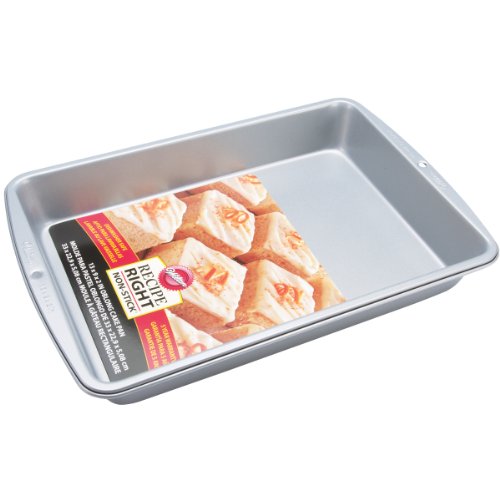
A genuinely complete starter kit is shorter than any boxed baking set suggests: a scale, one good half sheet pan, a balloon whisk with wires that won't collapse (the OXO Good Grips whisk has outlasted three-packs of flimsier ones in most kitchens that own it), a bench scraper, and a pair of 9-inch rounds like the Wilton Recipe Right two-pack for layer cakes. The Ateco bench scraper deserves special mention as the most underrated tool on this list — it divides dough, transfers chopped chocolate, cleans flour off the counter in two passes, and costs about as much as a fancy coffee.
The trap that catches new bakers is the decorating aisle. A 50-piece piping tip set, fondant smoothers, a rotating cake stand, and airbrush colors feel like progress, but they're tools for a craft you haven't started yet — and most sit unopened after the first ambitious weekend. Decorating skill is built on cakes that bake level and release cleanly, which is pan quality and measurement accuracy, not accessories. Buy decorating tools one project at a time, when a specific bake demands them.
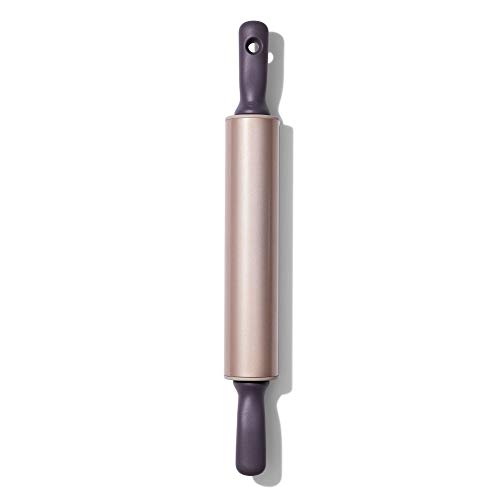
A rolling pin is the borderline case worth naming: skip it until you actually make pie, cookies you roll, or laminated dough. When you do, a ball-bearing beech pin like OXO's rolls smoothly enough to be worth owning over an improvised wine bottle — but the wine bottle genuinely works until then.