Buying Guide
The Complete Kitchen Scale Buying Guide
A kitchen scale is the cheapest precision instrument you'll ever own and the one most kitchens still lack. The case for owning one is settled — the real questions are which precision tier you need, how much capacity matters, and which design details (display position, shutoff timing) separate a scale you use daily from one that migrates to the back of a drawer. This guide answers each one.
Why Grams Win: The Flour Problem
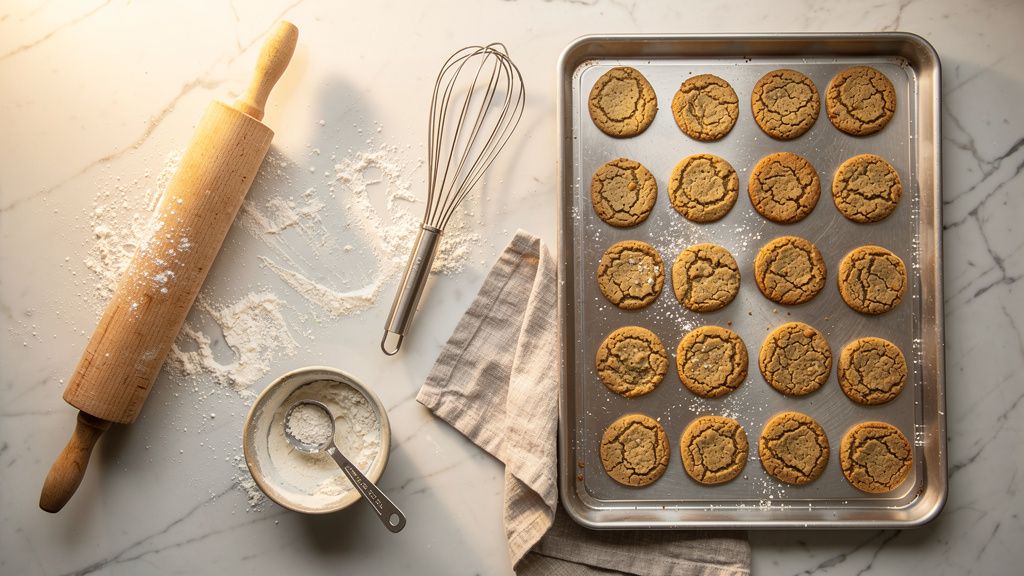
The argument for weighing comes down to one ingredient. A cup of flour scooped straight from the bag packs down to 150 grams or more; the same cup spooned in and leveled lands near 120. That's a 25% swing in the ingredient that determines whether bread has structure and cookies hold shape — and it happens invisibly, which is why two people following the same recipe get different results and blame the recipe. A scale ends the dispute: 120 grams is 120 grams regardless of scooping technique, humidity, or how settled the bag is.
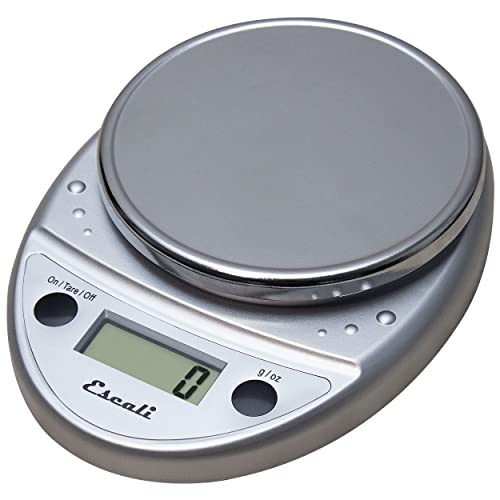
Weighing is also simply faster, which surprises people who think of it as the fussy option. Put the mixing bowl on the scale, hit tare, add flour to the target number, tare again, add sugar — one bowl, no measuring cups to fill, level, and wash. Every scale worth buying has a tare button; what separates them is how pleasant the workflow stays. The Escali Primo has run this exact loop reliably enough to earn NSF certification and a 15-year warranty, which is a remarkable promise on an instrument that costs less than a baking sheet.
Switch your recipes, not just your hardware. Recipes written in grams (most bread books, most serious baking sites) remove the conversion step entirely. For cup-based recipes, weigh with standard conversions once and write the gram figures in the margin — the recipe permanently improves.
1g vs 0.1g: Two Tools, Not One
Standard kitchen scales resolve to 1 gram, and for baking and cooking that's exactly right: bread, cakes, roasts, and meal-prep portions never need finer. The catch is at the bottom of the range — most 1-gram scales are unreliable below about 5 grams, which is precisely where yeast, salt, and baking soda live. A 1-gram error on 4 grams of instant yeast is a 25% error, and load-cell behavior at that range makes the displayed number closer to a guess.
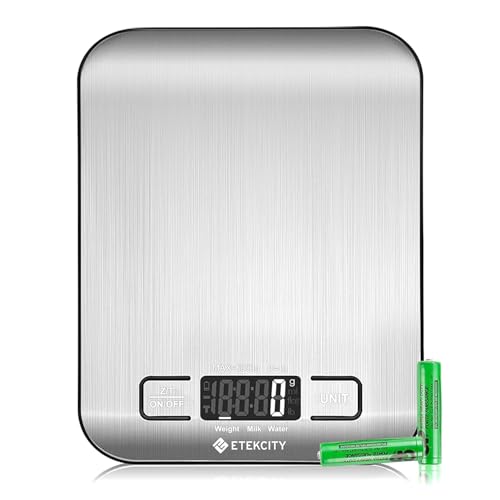
That's the case for 0.1-gram resolution — but not for replacing your main scale. High-precision load cells trade away capacity and platform size, so the right setup is two instruments: an 11-pound 1-gram scale as the daily workhorse, and a small 0.1-gram scale for the light stuff. The Etekcity 0.1g model is the rare scale that blurs the line, offering tenth-gram reading with full 11-pound capacity at a price under most single-purpose scales, while the American Weigh Scales LB-3000 is the specialist pick — smaller capacity, but user-recalibratable, which keeps it honest for years.
Coffee is where the second scale stops being optional. Pour-over and espresso work on ratios like 1:16 measured in tenths of a gram, with doses around 15 to 20 grams — squarely in the zone where 1-gram scales waffle. A compact 0.1-gram scale that lives with the coffee gear costs less than two bags of specialty beans and improves every cup more than either of them.
Capacity and the Big-Bowl Display Problem
Eleven pounds (5 kilograms) is the category standard for good reason: it covers a loaded mixing bowl, a holiday turkey's worth of brine ingredients, and double batches of dough with room to spare. The OXO 11-pound, Escali Primo, and KitchenAid scales all sit at this spec. Go bigger only with a specific use in mind — the Nicewell 22-pound model holds 1-gram precision across double the range on a larger platform, which earns its space for canning, bulk meal prep, and weighing whole roasts, and is overkill for everything else.
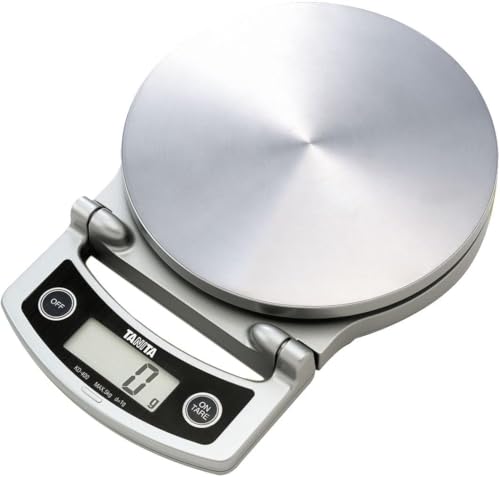
The spec sheets don't mention the problem you'll hit most often: put a wide mixing bowl on a scale and the display disappears underneath it. You end up bending sideways, eye-level with the counter, reading a shadowed LCD. The OXO solves this with a pull-out display that extends clear of the bowl — a feature no competitor at the price matches and the kind of detail that decides whether a scale gets daily use. Backlighting is the second half of the fix; the KitchenAid's backlit display reads from standing height with doughy hands, and the Tanita KD-400's hold function freezes the reading when the load blocks your view entirely.
Auto-Shutoff and the Other Details That Decide Daily Use
The most common complaint in scale ownership isn't accuracy — it's the scale turning itself off mid-recipe. You tare the bowl, walk to the pantry, come back, and the display is dark; power it back on and your tare is gone, leaving you to guess or start over. Shutoff timers run from about 3 minutes (the Nicewell) through 4 (the KitchenAid) to 5 (the OXO), and those minutes matter more than they sound: five is usually enough to survive a pantry trip, three frequently isn't. If a scale offers a way to disable or extend the timer, that's worth more than any premium finish.
What you can safely skip: app connectivity and built-in nutritional databases, which demo well and go unused once the novelty fades — your phone already does that job better. The Greater Goods Nourish is the reasonable exception for dedicated macro-trackers, since its tracking lives on the scale itself, but for everyone else the money is better spent on build quality. The features that do compound daily are mundane: a platform that wipes clean (stainless or tempered glass — the Taylor glass-top is even dishwasher-safe), a stable base that doesn't rock under an off-center bowl, and buttons that work with floured fingers. A scale earns its keep through roughly a thousand small uses a year; buy for the thousandth use, not the unboxing.