Buying Guide
The Complete Spice Rack Buying Guide
A spice rack is really three purchases disguised as one: a storage location, a jar system, and a freshness policy. Most people buy the location, ignore the other two, and end up with an attractive rack of flavorless dust. This guide treats all three — where your spices should live, what they should live in, and which racks to avoid entirely.
Pick the Location First: Cabinet, Drawer, Wall, or Counter
Storage location is a kitchen-size decision, not a style decision. If you have cabinet space near the stove, a tiered organizer like the SpaceAid four-tier — which expands to fit cabinets from 8 to 15 inches wide — is the default answer: spices stay dark and cool (which they prefer), every row is visible, and nothing occupies counter space. If you have a spare drawer instead, an angled insert like the Spigun three-layer bamboo organizer holds up to 36 jars face-up, readable at a glance from above — the fastest-access format of any system, and completely invisible when closed.
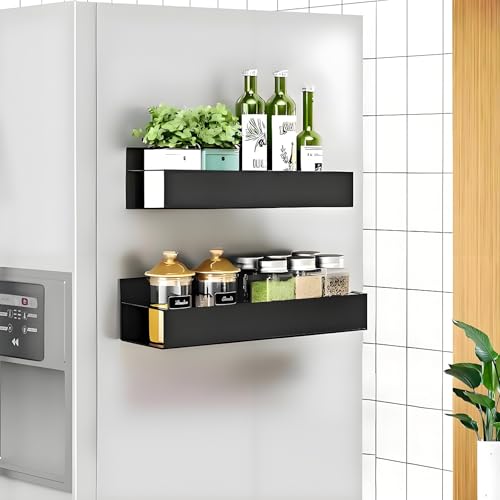
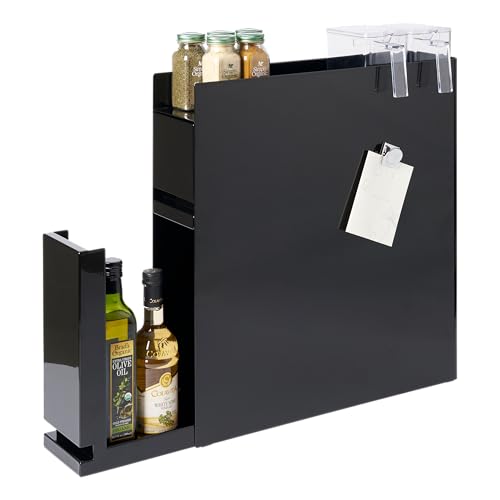
Small kitchens with neither spare cabinet nor spare drawer should go vertical. A wall-mounted bamboo rack uses space nothing else competes for, and the over-door DecoBros rack hooks onto a cabinet door in seconds with zero installation — the best storage-per-dollar in the category, with the honest caveat that it only fits standard round jars and can rattle if the door slams. Magnetic systems like the SimpleHouseware tins or the modular YAMAZAKI Tower units colonize the side of a fridge or range hood, which is real estate even studio kitchens have.
Countertop racks are the most popular format and the most situational. A rotating two-tier rack like OXO's spinning model puts two dozen jars within arm's reach of the stove, which is genuinely convenient — if you have the counter space to spare and cook enough that the convenience outruns the clutter. In kitchens under about 100 square feet, counter space is the scarcest resource there is, and a spice rack is rarely its best use.
Uniform Jars Are the Upgrade That Makes Every Rack Work
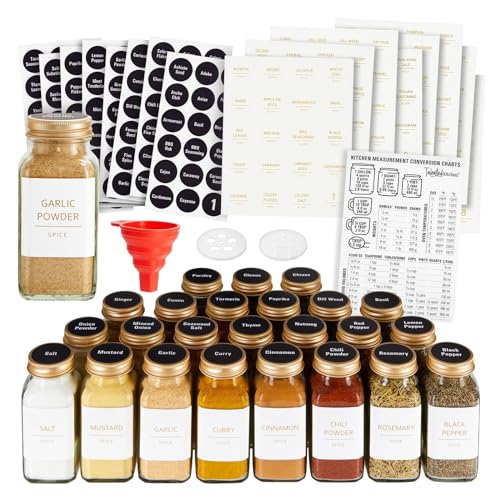
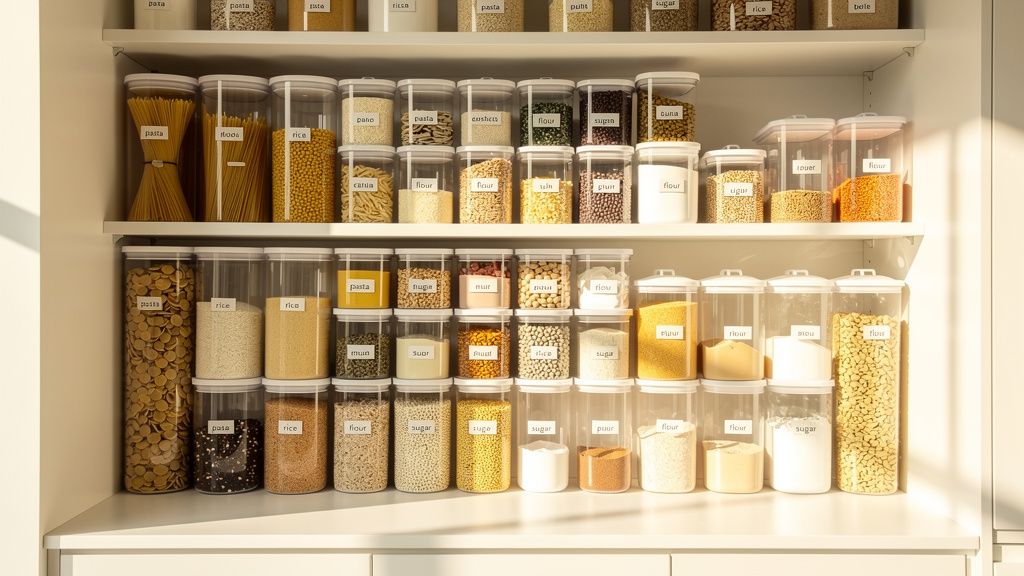
The chaos in most spice storage isn't the rack's fault — it's that spices arrive in 30 different bottle shapes, and no organizer handles mixed heights and diameters well. Tiered shelves jam, drawer inserts gap, and the tall bottle always hides the short one. Transferring everything into uniform jars, like the Talented Kitchen 24-pack of 4-ounce glass jars with pre-printed labels, fixes every downstream problem at once: every jar fits every rack, every label faces the same way, and you can see fill levels through the glass before you run out mid-recipe.
The transfer takes an afternoon and feels like a chore, which is why most people skip it — but it's also the moment you audit your collection. Smell each spice as you transfer it: anything with no aroma goes in the trash, not a new jar. Expect to discard a third of a typical cabinet. Wide-mouth jars matter more than they sound, too; refilling from a bulk bag through a narrow neck is the kind of small misery that makes people stop maintaining the system.
Label placement should match your storage format. Drawer storage wants labels on lids, read from above; shelf and rack storage wants them on the jar face. Sets that include both, or blanks for writing your own, save you from a label maker project later.
The Freshness Reality: Airtight Helps, Whole Spices Help More
Honest framing for this category: ground spices fade in six months to a year no matter what they're stored in. Airtight lids with silicone seals — standard on quality jar sets — slow the loss, and keeping jars away from heat and light slows it further, which is a quiet argument against open racks mounted beside the stove, where heat and steam age spices fastest. But no container makes year-old ground coriander taste like much of anything.
The storage decision that actually moves freshness is buying whole spices where you can. Whole cumin, coriander, peppercorns, and cardamom hold their oils for years, not months, and thirty seconds in a cheap grinder beats any preservation scheme for the ground version. A practical split: buy whole for spices you use weekly and can grind, accept ground for the ones you won't, and buy the ground ones in small quantities — the 4-ounce jar size common to sets like Talented Kitchen's is a feature here, not a limitation, because it roughly matches what you should use before it fades anyway.
Cooking-Speed Access — and the Pre-Filled Rack Trap
A spice system earns its keep during the 20 seconds when a pan is hot and you need the smoked paprika now. That's the standard to judge formats by: drawer inserts and tiered cabinet shelves let you read every label without touching anything, which is why they beat carousels in actual cooking — a rotating rack makes you spin and scan a moving target while something browns too fast behind you. If you do choose a carousel for its footprint, alphabetize it or group by cuisine; a fixed order turns the spin-and-scan into muscle memory.
The trap in this category is the pre-filled revolving rack. Models like the Kamenstein 20-jar tower look like instant competence — twenty filled jars, one purchase — but the spices inside are the cheapest part of the product, often already a year into their shelf life when they arrive, packed in small 0.6-ounce jars you'll empty fast if you actually cook. The rack outlives its contents by design. Kamenstein's five-year free refill program is a genuine partial answer if you'll actually mail away for refills; most owners don't. For a first kitchen it's a defensible shortcut — for anyone who already cooks, empty jars you fill with spices you chose will taste better the first week and every week after.